
Blog
Latest news, tutorials, and updates from our team.
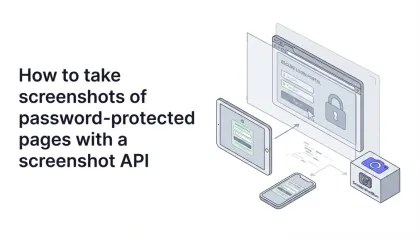
How to take screenshots of password-protected pages with a screenshot API
I kept running into the same problem — send a dashboard URL to a screenshot API, get back a picture of the login form. Turns out, passing a session cookie along with the request is all it takes. Here's how I set it up for my own admin panel, with code for cURL, Node.js, and PHP, plus two other auth methods for staging servers and token-protected pages.
Read more →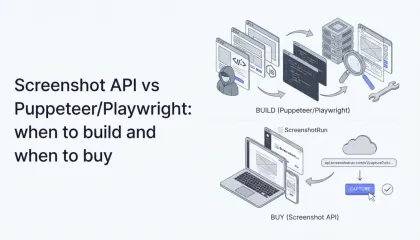
Screenshot API vs Puppeteer/Playwright: when to build and when to buy
I built both sides of this equation — a Playwright renderer and a screenshot API on top of it. Most "build vs buy" articles are written by API vendors pushing you to buy. This one walks through the real problems (lazy loading, cookie banners, memory, timeouts), gives you honest thresholds for when each approach wins, and lets you decide.
Read more →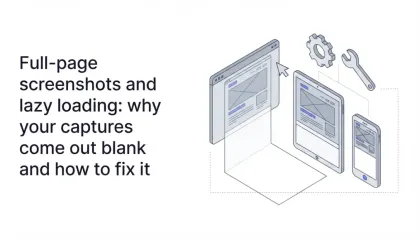
Full-page screenshots and lazy loading: why your captures come out blank and how to fix it
Lazy loading breaks automated full-page screenshots because headless browsers do not scroll. Working fixes for Playwright and Puppeteer with code examples and real-world edge cases
Read more →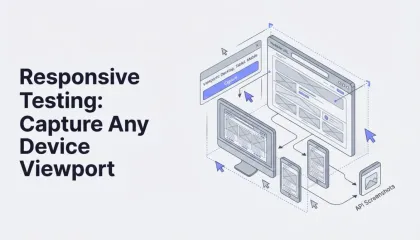
Responsive Testing: Capture Any Device Viewport
How to capture mobile and tablet screenshots of any website with a screenshot API. Correct viewport sizes for iPhone, iPad, and Android, the difference between device=mobile and just setting width, full-page captures, and Node.js code examples.
Read more →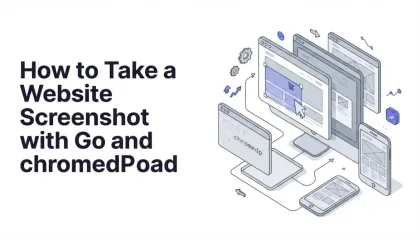
How to Take a Website Screenshot with Go and chromedp
Learn how to capture website screenshots with Go using two approaches: chromedp for local browser automation and a screenshot API for production. Working code, full-page captures, mobile viewports, and honest comparison.
Read more →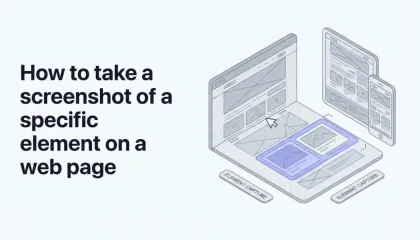
How to take a screenshot of a specific element on a web page
Sometimes you don't need a screenshot of the entire page — just one element. A pricing table, a chart, a widget. Here's how to capture a specific HTML element using a CSS selector with Playwright, Puppeteer, and a screenshot API.
Read more →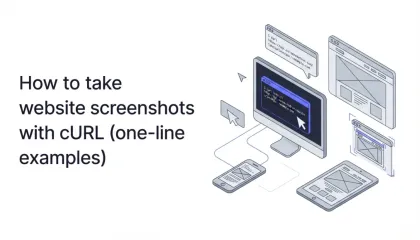
How to take website screenshots with cURL (one-line examples)
Capture website screenshots straight from your terminal. One-line cURL examples for full-page captures, mobile viewports, dark mode, PDF export, thumbnails, and cookie banner removal — no SDKs, no libraries, just cURL.
Read more →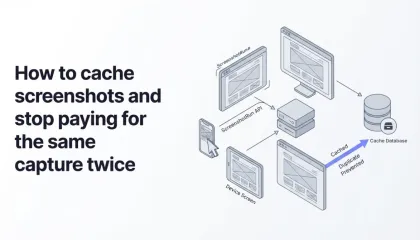
How to cache screenshots and stop paying for the same capture twice
About 30-40% of screenshot API requests are duplicates — same URL, same parameters, same result. Here's how I built caching into screenshotrun and three strategies you can use on your side to cut your API bill and speed up delivery: TTL-based cache, content hashing, and event-driven refresh via webhooks. Code examples in PHP/Laravel and Node.js included.
Read more →
When a Screenshot Tells You What a Log Can't: 5 Situations That Matter
Logs record what the system did. Screenshots show what the user saw. The difference seems obvious — but a lot of teams quietly lose this information without noticing. Here are five situations in product, marketing, and client work where a screenshot gives you the answer a log simply can't.
Read more →
Build a Link Directory with Auto-Generated Thumbnails
Learn how to automatically generate website preview thumbnails for your link directory using a screenshot API. Step-by-step PHP and Node.js code with caching, real output screenshots, and tips for handling cookie banners and large directories.
Read more →
How to take a website screenshot with Python
Learn how to capture website screenshots with Python using three approaches: Selenium, Playwright, and a screenshot API. Step-by-step code, real output screenshots, full-page captures, mobile viewports, and honest comparison of pros and cons for each method.
Read more →
Screenshot API Use Cases I Didn't Expect
Most people think of screenshot APIs as a simple URL-to-image tool. But developers who've actually integrated one into their stack use it for OG image generation, link preview thumbnails, visual regression testing, compliance archiving, and competitor monitoring. Here are five real scenarios where a screenshot API saves hours of work.
Read more →